
Picture this: a group of voices trapped in a never-ending game of charades, trying to express themselves amidst the uproar of so-called occupation and extremism. It’s like being at a family reunion where everyone talks over each other, and all you want is a slice of cake. These Palestinian voices are attempting to cut through the noise, but it’s harder than finding a needle in a haystack—if the haystack were on fire and the needle was also part of a complicated political debate!
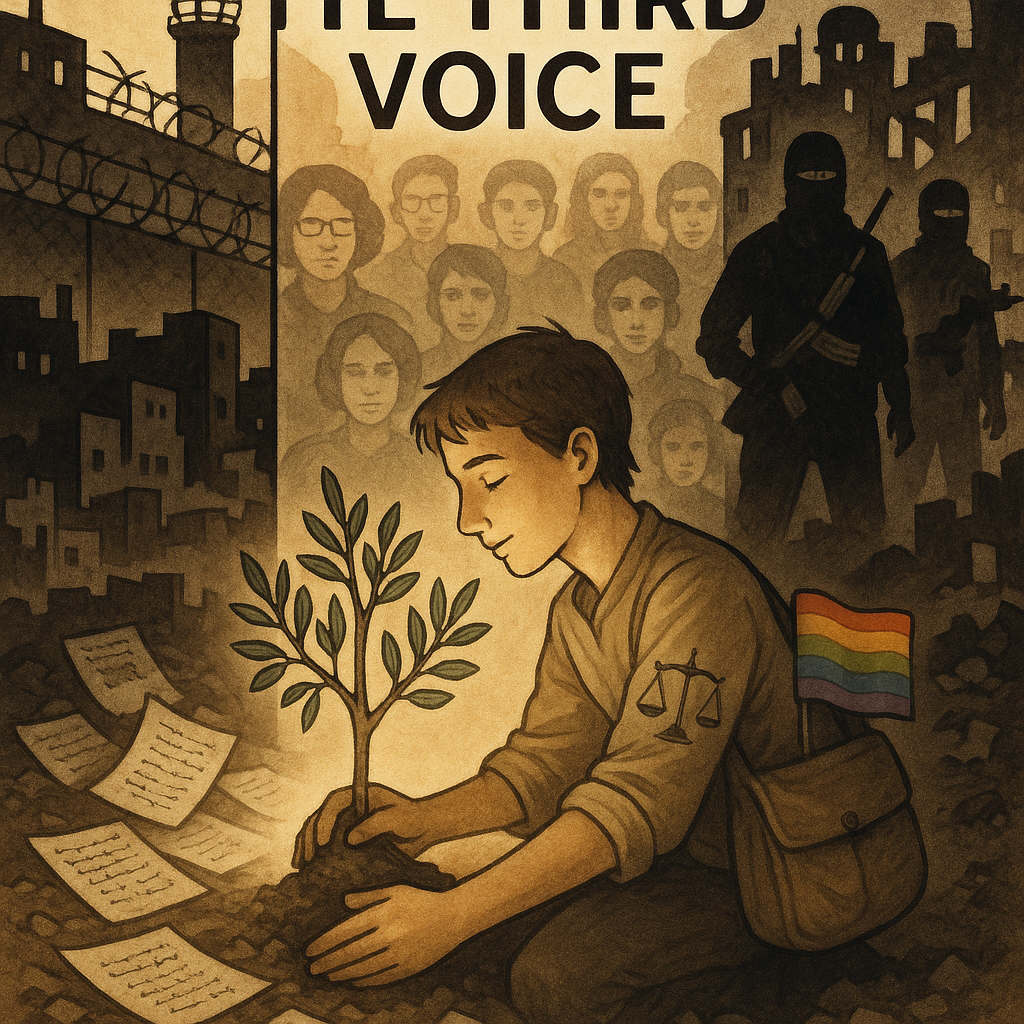
In the global chat about the Israel-Palestine conflict, a rather amusing pattern has emerged: a black-and-white narrative that paints the scenario as if it’s a superhero movie, with oppressors in capes and the oppressed swinging by on ropes, leaving out all the gray areas. In this moral mash-up, any group giving a thumbs down to the so-called Israeli occupation gets a Hollywood makeover, even if their actions or beliefs could use a bit of a reality check on core humanist principles. One of the funniest side effects of this storytelling is how it manages to hush up Palestinians who have their reservations—not just about the so-called occupation, but also about the not-so-great leadership at play, especially with Hamas having its own quirky agenda!
For many Western liberals and progressives—armed with their humanist values, fueled by post-colonial theories, and sporting a healthy skepticism of Western power—cheering for Palestinian resistance has turned into the ultimate test of political hipness. But in the chaos of applause, the critical voices from within Palestinian society have been shoved on the back burner. These are the dreamers who crave freedom, dignity, and peace, but instead of strapping on explosives, they’re packing dialogue, building civil society, and giving a big thumbs-down to any form of repression.
Take, for instance, Mahmoud Darwish, Palestine’s national poet and perhaps the original poet who could’ve moonlighted as a stand-up comedian. While his poetry frequently puts on its serious resistance hat, Darwish was no simple partisan; he knew life was too short for just one side. He once quipped, “The Palestinian cause is not only the victim of Israel. It’s also the punching bag for Arab regimes and the unfortunate soap opera called Palestinian internal chaos.” In another moment of wisdom, he declared, “I don’t like slogans, and I don’t like death. I like life, and I like freedom”—a refreshing take, as most folks don’t usually go for death on their to-do lists! His work is a delightful cocktail that resists being labeled; he was a voice of national identity while also giving ideological rigidity a good-natured nudge to lighten up.
Raja Shehadeh, a lawyer and human rights advocate, definitely has a knack for tackling heavy topics with a sprinkle of humor. In his memoir Where the Line Is Drawn, he quips: “To believe solely in the tale of woe is akin to wearing blinders and forgetting that we have a hand in the mess and a say in the future spaghetti we’re tying ourselves into!” His take on Palestinian life highlights both the brutal kick of occupation and the not-so-funny comedy of political blunders happening behind the scenes.
There are certainly more pressing matters at hand. Rami Aman, a journalist from Gaza, found himself in hot water with Hamas for setting up Zoom calls between Palestinians and Israelis—yup, trying to chat about peace! Apparently, that earns you the title of “collaborator.” After his 2020 release, he quipped, “They think I’m a collaborator just for talking to Israelis. But really, who’s winning here? The extremists, of course! They must love our awkward silence!”
Bassem Eid, a human rights campaigner, has spent decades pointing fingers at both Israeli mischief and Palestinian leadership blunders. “I dream of a day when Palestinians will hold their leaders accountable with the same enthusiasm they use to chastise Israel—like a sports fan yelling at the TV,” he quipped. Eid’s knack for critique often turns him into the oddball at the party, not just in his own community but also among Western supporters who struggle to fit him into their neatly labeled boxes.
Mosab Hassan Yousef, the son of a Hamas co-founder turned whistleblower, provides one of the most eyebrow-raising yet revealing tales. “Hamas doesn’t exactly win a gold star for caring about Palestinian lives,” he quips in Son of Hamas. “They treat them more like human shields and less like actual humans—talk about an unconventional currency!” His story tosses a hefty dose of reality into the otherwise dramatic resistance narrative, revealing some brutally funny internal truths.
Even more marginalized are LGBTQ+ Palestinians, including the fabulous folks at AlQaws and Aswat, who are juggling repression from Israeli authorities and a side of judgment from within Palestinian society—talk about a double whammy! “Our struggle is against all forms of repression—think of it as a two-for-one deal: Israeli occupation and Palestinian patriarchy!” AlQaws cleverly quipped in a 2019 statement. One activist humorously pondered, “What is liberation if we can’t strut our stuff and be our authentic selves? It’s like getting a party invitation but no party!”
These voices aren’t on the sidelines because they’re unclear or chicken—nope, they’re on the bench because they dare to mess with the global blockbuster script, which is all about heroes in capes battling villains with dramatically dark music. They challenge us to juggle a couple of brainy thoughts at once: that Israel’s so-called occupation is as real as a sitcom laugh track (and just as unjust), and that Hamas isn’t exactly the people’s champ of Palestinian dreams.
To be truly pro-Palestinian doesn’t mean handing out Hamas t-shirts at a barbecue; it means cheering for Palestinians—every quirky, brave, and slightly oddball one of them! We’re talking about the activists who can’t even get a moment of peace to chat, the queer teens dodging danger like it’s a game of dodgeball, the poets crafting verses that are better than your last Tinder date’s pickup lines, and the lawyers who are out here risking it all for the ultimate prize: the rule of law (and maybe a solid cup of coffee).
These are the voices that truly deserve a megaphone! They don’t just resist; they serve up a buffet of liberation, complete with sides of justice, pluralism, and peace. Against all odds, these brave souls still have the audacity to believe in life—like a cat that keeps landing on its feet, no matter how many times it jumps!

 Love in the Levant