Abolish the monarchy?

CONSIDERATIONS MUST BE MADE

  1. Tired of waving and smiling? Abolishing the monarchy means no more awkward royal waves and forced grins at public events. Let’s spare the royal family from carpal tunnel and sore cheeks!
  2. Fancy a career change? Think about the job opportunities that will open up once the monarchy is abolished. No more worrying about which fork to use or how to properly address a viscount!
  3. What’s with all the palaces? Abolishing the monarchy could free up some prime real estate for affordable housing. Imagine turning Buckingham Palace into a giant Airbnb!
  4. Crown jewels or costume jewellery? Let’s face it, the monarchy’s bling is so last century. It’s time to embrace a more down-to-earth fashion sense for our national symbols.
  5. Tax dollars at work? Abolishing the monarchy means no more debates over royal expenses. Just think of the diversions those funds could support, like a national cheese rolling competition!

Nevertheless, it’s crucial to grasp the intricate and often perplexing subject of abolishing the UK monarchy. This is not your average decision – we’re delving into centuries of history, culture, and rules that make your head spin faster than a royal ballroom dance. Picture this: the monarchy has been strutting its stuff, shaping the country’s identity and exerting influence over the political and social scenes like a well-dressed puppet master. And let’s not forget the pomp and circumstance – the monarchy is the jewel in the crown of British traditions and ceremonies, like a grand performance that’s been running for centuries.

But wait, there’s more! Tinkering with the monarchy means tiptoeing through the minefield of constitutional considerations. We’re talking about the blueprint of how the UK is run – not exactly a piece of cake to reshuffle. So, when we talk about giving the monarchy the old heave-ho, we’re wading into some seriously deep waters. It’s like playing a giant game of Jenga, but instead of blocks, it’s laws and traditions teetering on the edge.

In a nutshell, discussing the possible abolishment of the UK monarchy demands serious brainpower and a good understanding of its ins and outs. This is no laughing matter – well, maybe just a bit – and it merits thoughtful contemplation to truly grasp the complexity and importance of the topic within the colourful tapestry of British society and governance.

When pondering the potential abolition of the UK monarchy, one simply can’t ignore the delightful tango between tradition, heritage, and modern governance. The monarchy is like the nation’s favourite antique furniture, embodying centuries of drama and leaving its distinguished mark on the cultural quilt of the nation. From grand royal weddings to the pompous state openings of parliament, these shenanigans are deeply woven into the UK’s cultural DNA. These age-old customs not only hold their own weight but also act as a wobbly bridge connecting the past, present, and future of the nation.

Moreover, the monarchy is like the ultimate tourist attraction, pulling in people from all corners of the globe who just can’t wait to soak in the glory of those old, fancy palaces, attend royal ceremonies, and check out all the places connected to the royals. It’s like the monarchy is saying, “Move over, Disney World, here comes the real magic!” The whole money-making aspect of the monarchy, especially through tourism, adds a quirky twist to the ongoing debate about whether it’s still relevant in today’s world.

From a political standpoint, the monarchy’s shenanigans with the UK government and its symbolic authority raise eyebrow-raising questions about who’s really in charge and what even is democracy any more. The whole constitutional setup with the monarchy has been through more makeovers than a reality TV star, and any tweaks to this setup would need some serious legal and political brainstorming.

Furthermore, the emotional and symbolic significance of the monarchy to the people of the UK cannot be underestimated. It’s like having a pet corgi that the whole nation takes care of! It embodies a sense of national identity and unity, transcending partisan divides and serving as a unifying symbol for many. Understanding the sentiments and attachments associated with the monarchy is essential in any substantive discussion about its potential abolition. After all, who wouldn’t want to keep the crown jewels in the family?

Posted in Fun, History, Politics | Tagged , , , , , | Leave a comment

Social media and the Gaza War

How much does social media distort the Gaza War in 2023-24?

The role of social media in shaping public perception of the Gaza War

Social media has become a pervasive presence in modern warfare, shaping public perception of conflicts like the Gaza War in 2023-24[1]. Millions of people have turned to platforms like TikTok and Instagram to try and make sense of the brutal conflict in real-time[2]. However, the content circulating on social media often offers a distorted representation of the truth[3]. While social media has the potential to provide a platform for diverse voices and perspectives, it can also be used to spread misinformation and propaganda, particularly in the context of war.

The impact of social media on news coverage of the Gaza War cannot be overstated[4]. Social media platforms like Twitter and Facebook have become primary sources of news for many people, with traditional news outlets relying on social media for breaking news and eyewitness accounts[1]. However, the spread of misinformation and propaganda on social media can significantly distort the news coverage of the conflict[5]. Social media platforms have also been accused of censorship, with Meta being criticized for systematically censoring pro-Palestine voices during the conflict[6]. This censorship can further contribute to a distorted representation of the conflict.

The spread of misinformation and propaganda on social media during the Gaza War has been a significant issue[5][7][5][2][8]. False rumours, misleading images and videos, and outright falsehoods have all been circulated on social media platforms and messaging apps[5]. This wave of misinformation can shape how panicked citizens and the global public view the conflict with Hamas[7]. While social media can provide a vital source of information from inside Gaza, it is crucial to approach this information with a critical eye and recognize the potential for distortion and manipulation[9][3].

The distortion of the Gaza War on social media

Social media platforms have been known to amplify biases and create echo chambers, where users are exposed to content that aligns with their existing beliefs[10]. This can have a significant impact on the way people perceive and interpret events, including the Gaza War in 2023-24. With social media algorithms promoting content that is more likely to generate engagement, users may be more likely to encounter extreme viewpoints and polarizing content, further reinforcing their pre-existing biases. This can lead to a distorted understanding of the conflict, with individuals only seeing one side of the story and failing to consider alternative perspectives.

One of the most significant challenges posed by social media in the context of the Gaza War is the spread of false information and conspiracy theories[11]. Misleading and outright false claims can be rapidly disseminated across social media platforms, often without any fact-checking or verification. This can lead to the creation of distorted narratives and misleading images that further fuel tensions and exacerbate the conflict. In addition, the perceived bias or lack thereof in media coverage can affect public trust in media outlets, influencing how the public consumes news and information[4]. This can further contribute to the spread of false information and conspiracy theories, as individuals seek out alternative sources of information that align with their existing beliefs.

The flood of misinformation in the Gaza War is shaping how panicked citizens and a global public view the conflict with Hamas[7]. This trend includes a wave of first-party terrorist propaganda, content depicting graphic violence, and misleading and outright false claims[2]. Social media platforms have struggled to combat this misinformation, with the rise of AI making it even more challenging to identify and remove false content[12]. While platforms such as Twitter have taken steps to remove newly-created accounts affiliated with Hamas and escalate posts for sharing false information[13], the sheer volume of content being generated on social media makes it difficult to address the issue effectively. As a result, the Gaza War may be significantly distorted on social media, with false information and misleading narratives contributing to a distorted understanding of the conflict.

The consequences of social media distortion on the Gaza War

Social media distortion during the Gaza War can have significant consequences on international perceptions and diplomacy[14]. The spread of mis- and disinformation through social media platforms can cause misunderstandings and misreading of the current situation, leading to biased and inaccurate portrayals of the conflict[15]. This can impact how the public perceives the war and can influence the decisions of policymakers and politicians[4]. The international community’s response to the conflict can be shaped by the information they receive through social media, highlighting the need for responsible social media use in times of conflict[2].

The effect of social media distortion is not limited to international perceptions and diplomacy but can also impact local communities and reconciliation efforts. Unequal content moderation by social media platforms risks further undermining the ability of the combatants in and outside of Gaza to exercise their right to freedom of expression[16]. The spread of fake news and propaganda can fuel tensions and exacerbate divisions between communities, hindering efforts towards reconciliation and peace[1][17]. Social media platforms have become a crucial means of communication in times of conflict, and unjustified take-downs during crises like the war in Gaza can deprive affected communities of vital information[18][5].

The need for responsible social media use in times of conflict cannot be overstated. Social media platforms should prioritize accurate and responsible content moderation to prevent the spread of fake news and propaganda[19]. Users should also be cautious and critical of the information they consume and share, verifying sources before sharing any information[5]. Additionally, policymakers and politicians should be aware of the impact of social media on international perceptions and diplomacy and take steps to address any misrepresentations[14]. By working together, we can ensure that social media is used responsibly in times of conflict, promoting accurate and unbiased reporting and supporting efforts towards reconciliation and peace.

In conclusion, social media has played a significant role in shaping public perception of the Gaza War in 2023. However, the distortion of the conflict on social media has been a cause for concern. The amplification of biases, the spread of false information, and the creation of distorted narratives have all contributed to a distorted understanding of the conflict. The consequences of this distortion are far-reaching, affecting international perceptions and diplomacy, as well as local communities and reconciliation efforts. Therefore, responsible social media use is crucial in times of conflict to ensure accurate and unbiased reporting. It is up to individuals and social media platforms to take responsibility and ensure that the truth is not lost in the noise of misinformation and propaganda.

1. Israel-Gaza war has some posting more than ever, as …. (n.d.) Retrieved December 21, 2023, from http://www.washingtonpost.com 

2. The Israel-Hamas war reveals how social media sells … – CNN. (n.d.) Retrieved December 21, 2023, from http://www.cnn.com 

3. The Israel-Hamas War Reveals the Major Flaws of Social …. (n.d.) Retrieved December 21, 2023, from time.com/6342140/israel-hamas-war-social-media-flaws/ 

4. How Does the Media Impact Public Perception about War?. (n.d.) Retrieved December 21, 2023, from http://www.american.edu 

5. Disinformation about Israel and Gaza floods social media …. (n.d.) Retrieved December 21, 2023, from http://www.npr.org 

6. Meta ‘stifling’ pro-Palestine voices on social media, rights …. (n.d.) Retrieved December 21, 2023, from http://www.aljazeera.com 

7. A flood of misinformation shapes views of Israel-Gaza conflict. (n.d.) Retrieved December 21, 2023, from http://www.washingtonpost.com 

8. Social media disinformation spreads amid war in Israel. (n.d.) Retrieved December 21, 2023, from http://www.cbsnews.com 

9. Amid Israel-Hamas conflict, ‘information war’ plays out on …. (n.d.) Retrieved December 21, 2023, from abcnews.go.com 

10. Social Media in the Israel-Palestine Conflict. (n.d.) Retrieved December 21, 2023, from http://www.linkedin.com 

11. Who’s behind Israel-Gaza disinformation and hate online?. (n.d.) Retrieved December 21, 2023, from http://www.bbc.com/news/world-middle-east-67114313 

12. In Israel-Hamas War, Truth and Fiction Is Hard to Discern …. (n.d.) Retrieved December 21, 2023, from http://www.nytimes.com 

13. Social media platforms swamped with fake news on the …. (n.d.) Retrieved December 21, 2023, from http://www.aljazeera.com 

14. Censorship of Gaza on social media. (n.d.) Retrieved December 21, 2023, from researchcentre.trtworld.com 

15. Parsing disinformation in the Israel-Hamas conflict. (n.d.) Retrieved December 21, 2023, from http://www.brookings.edu 

16. Global: Social media companies must step up crisis …. (n.d.) Retrieved December 21, 2023, from http://www.amnesty.org 

17. Gaza and the War Against Disinformation. (n.d.) Retrieved December 21, 2023, from carnegieendowment.org/sada/91165 

18. TechScape: Are social media giants silencing online …. (n.d.) Retrieved December 21, 2023, from http://www.theguardian.com 

19. Are social media giants censoring pro-Palestine voices amid …. (n.d.) Retrieved December 21, 2023, from http://www.aljazeera.com

Posted in Uncategorized | Leave a comment

Candle of G-d

Too many candles – too many deaths – too many dead Jews

Candle of gpd

Earthly reality is fuel to the flame of Divine reality; everything is consumed by G-d.

But earthly reality is not only matter and animality; it is also humanity.

We, too, belong to the world. The difference is that the soul of humanity is capable of using this fire in order to transform and not to annihilate.

Human beings can raise things up to a higher level and thus preserve them.

We are letting the previous essence burn up and, as in every burning, which is actually an essential chemical change, we are changing the composition of the reality of the world.

The justification of our life is that, at every moment, it burns in the consuming fire of the Lord, for our soul is the candle of G-d.

Posted in Faith | Tagged , , , , , | Leave a comment

Follow the money – cui bono?


How is Hamas financed, and who benefits from its terrorism?

The historical ties between Iran and Hamas can be traced back to the latter’s creation in 1987[1]. Since then, Iran has been a significant supporter of the Palestinian terrorist group, providing financial aid, weapons, and political backing[2].

This relationship has been instrumental in strengthening Hamas and enabling it to carry out attacks against Israel[3].

The alliance between Iran and Hamas has evolved over time, adapting to the changing geopolitical landscape in the Middle East, but the financial and military support provided by Iran has remained a cornerstone of Hamas’ operations.

Iran’s financial assistance to Hamas has been particularly evident during periods of conflict with Israel. For instance, during the well-planned and multipronged attack by Hamas against Israel in a recent month, Iran’s support enabled the group to kill more than 1,400 people[2].

The U.S. Department of the Treasury’s Office of Foreign Assets Control (OFAC) has imposed sanctions on ten key Hamas figures, highlighting the connection between Iran’s funding and the group’s terrorist activities[4].

This financial support from Iran has allowed Hamas to continue its violent resistance against Israel[5], despite the group’s struggles to govern Gaza. Iran’s financial and military assistance to Hamas has had a profound impact on the group’s military capabilities. By funnelling support from charities and friendly nations through a global financing network, Iran has helped Hamas to develop a formidable arsenal and enhance its operational capabilities[6].

Some consequences of this support include:

  • Increased military capacity, allowing Hamas to launch surprise attacks and target strategic locations[5]
  • Greater access to advanced weaponry, such as rockets and missiles, which can be used to target Israeli civilians and military installations[7]
  • The ability to maintain a strong presence in the Gaza Strip, despite the ongoing humanitarian crisis[8]
    This support from Iran has not only enabled Hamas to continue its violent resistance against Israel but has also played a significant role in shaping the broader geopolitical dynamics in the Middle East.

Qatar has played a significant role in financially supporting Hamas’ global financing network to secure funds from various charities and friendly nations[6].

In 2007, Qatar sided with Hamas and endorsed its takeover of Gaza, providing both political and financial assistance to the Islamist group[9].

As the Mossad chief, Yossi Cohen, managed the Qatari file for many years, he began to question Israel’s policy toward the Gaza money[10].

Since 2007, the Qatari government has been financing Hamas far from any international control, but this financing became coordinated with Israel in 2014[11].

Qatar was even prepared to provide funds to the Gaza Strip through Hamas during the 2014 Israel-Hamas war to alleviate the humanitarian crisis in the region[12].

Turkey

In addition to Qatar’s support, Turkey has also provided political and financial backing to Hamas.

Turkish President Recep Tayyip Erdogan has publicly defended the group, stating that “Hamas is not a terrorist organization” following a massacre of Israeli civilians in October 7[13].

The U.S. Department of the Treasury’s Office of Foreign Assets Control (OFAC) has imposed sanctions on ten key Hamas members, but this has not deterred Turkey from maintaining its support for the group[4].

Hamas has developed ties with various regional players and organizations in the Middle East since its inception in 1987[1].

Although most of Gaza’s population lives in poverty, Hamas receives financial support from countries such as Iran and Qatar, as well as other donors, allowing it to maintain its military and political activities in the region[14].

The group has faced financial difficulties due to late and reduced payments from Iran, but it continues to seek funding from other sources, such as choosing between Qatar and Jordan for establishing new financial networks[15].

Taxation

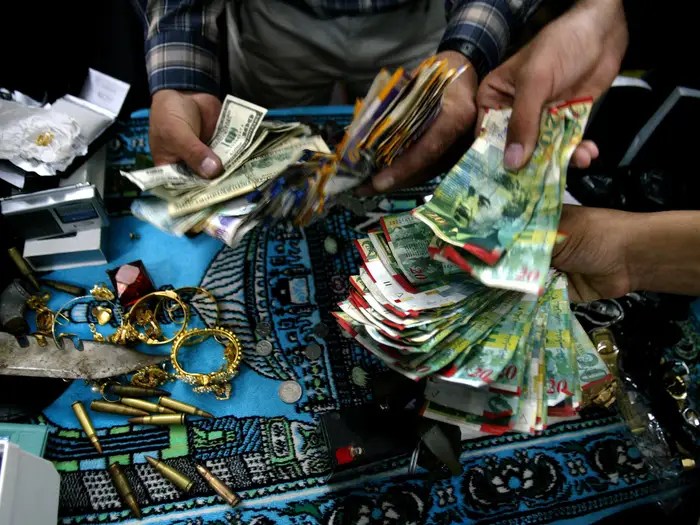
One of the primary domestic sources of income for Hamas is taxation and revenue collection in Gaza [16].

Israel controls Palestinian tax revenue on behalf of the Palestinian Authority (PA), and this system allows Hamas to access a portion of these funds [17].

Additionally, Hamas imposes taxes on various goods and services within the Gaza Strip, such as utilities and imports, providing a steady flow of income to support their operations [14].

The funds generated through these taxation methods are crucial for Hamas to maintain its activities and exert influence within the region.

Smuggling

Another significant source of income for Hamas is smuggling through tunnels and borders [16].

These tunnels, often referred to as the “Philadelphia corner,” connect the Gaza Strip to Egypt, allowing for the smuggling of goods, weapons, and cash [18].

Hamas has been known to smuggle money from exiled leaders and other sources, further bolstering their financial capabilities [18].

Additionally, the group has been involved in drug, arms, and people trafficking, as well as money laundering operations, in connection with other organizations such as Hezbollah [14].

These smuggling activities provide a substantial and consistent source of revenue for Hamas, enabling them to continue their militant activities and maintain control within the Gaza Strip.

CHARITABLE DONATIONS

Charitable donations from individuals and groups also contribute to Hamas’ financial support [6].

The organization leverages a global financing network to funnel support from charities and friendly nations, often passing cash through multiple intermediaries to obscure its origin and destination [6].

Some of these funds are transferred from countries such as Turkey and Iran, with estimates suggesting that Iran alone provides between $70 million and $100 million per year to Hamas [19][2].

Furthermore, Gaza-based financial institutions like Samir Herzallah and Brothers For Money Exchange and Remittances (Samir Exchange) have worked with Hamas to facilitate money transfers, helping to maintain their financial resources [20].

These charitable donations and financial networks play a vital role in sustaining Hamas’ operations and presence in the region.

In conclusion, Hamas’ economic support comes from a variety of sources. Iran has been a significant contributor, providing financial assistance during conflicts and impacting Hamas’ military capabilities. Additionally, countries like Qatar and Turkey have played a role in funding Hamas through political and financial support. Hamas also relies on domestic sources of income, such as taxation and revenue collection in Gaza, smuggling through tunnels and borders, and charitable donations from individuals and groups.

See also Inside Hamas’s sprawling financial empire in The Economist, where it can be read:

“But the lion’s share of Hamas’s money—at least $500m a year, say Israeli officials—comes from its investments, some of which are firms registered in countries across the Middle East. These are run by Hamas’s investment office and employ its members. American officials say the firms donate to charities, which in turn funnel funds to Hamas; Turkish officials say profits are sometimes taken directly.

Untangling these revenue streams is tricky for Western regulators. One such firm built the Afra Mall, Sudan’s first shopping mall, while another has mines near Khartoum, its capital. A third built skyscrapers in Sharjah, in the United Arab Emirates (UAE). Many of these companies boast of their business deals, but deny any affiliation with Hamas.”


  1. Qatar, Iran, Turkey and beyond: Hamas’s network of allies. (n.d.) 1. Qatar, Iran, Turkey and beyond: Hamas’s network of allies. (n.d.), from http://www.france24.com
  2. A primer on Hamas funding sources, Iranian support …. (n.d.), from http://www.acfcs.org
  3. Iran, Hamas, and Islamic Jihad: A marriage of convenience. (n.d.), from ecfr.eu
  4. Following Terrorist Attack on Israel, Treasury Sanctions …. (n.d.), from home.treasury.gov/news/press-releases/jy1816
  5. What Is Hamas?. (n.d.), from http://www.cfr.org/backgrounder/what-hamas
  6. Who funds Hamas? A global network of crypto, cash and …. (n.d.), from http://www.reuters.com
  7. Israel and Hamas October 2023 Conflict – CRS Reports. (n.d.), from crsreports.congress.gov/product/pdf/R/R47754
  8. Humanitarian Assistance and West Bank/Gaza. (n.d.), from http://www.wilsoncenter.org
  9. 10 Things to Know About Hamas and Qatar. (n.d.), from http://www.fdd.org
  10. How Israel Secretly Propped Up Hamas. (n.d.), from http://www.nytimes.com
  11. Cash flow: 16 years of Qatari money to Hamas has created …. (n.d.), from http://www.calcalistech.com/ctechnews/article/lretnzx9l
  12. Qatar sent millions to Gaza for years – with Israel’s backing. …. (n.d.), from http://www.cnn.com
  13. 10 Things to Know About Hamas and Turkey. (n.d.), from http://www.fdd.org
  14. Gaza is plagued by poverty, but Hamas has no shortage …. (n.d.), from http://www.nbcnews.com
  15. Turkey May Provide Hamas With $300 Million in Annual Aid. (n.d.), from http://www.haaretz.com
  16. Who’s funding Hamas?. (n.d.), from http://www.businessinsider.com
  17. How Israel controls $188 million of Palestinian money …. (n.d.), from http://www.aljazeera.com
  18. Gaza’s Tunnels, Now Used to Attack Israel, Began as …. (n.d.), from http://www.nationalgeographic.com
  19. U.S. And UK Target Additional Hamas Finance Officials …. (n.d.), from home.treasury.gov/news/press-releases/jy1981
  20. U.S., UK, and Australia Target Additional Hamas Financial …. (n.d.), from home.treasury.gov/news/press-releases/jy2036, from http://www.france24.com
Posted in History, Politics | Tagged , , , , | Leave a comment

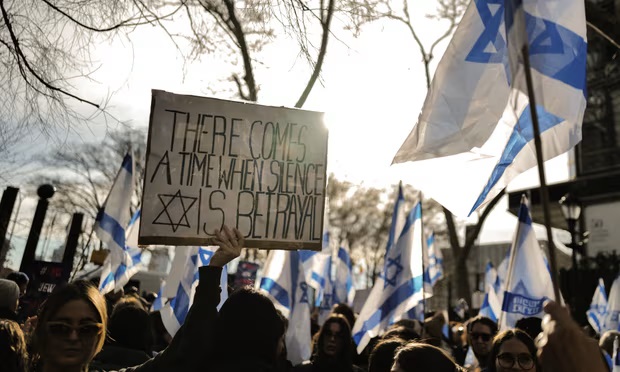
SOLIDARITY OR ANTISEMITISM? THE 3-D TEST

Let’s start with one of the favourite canards of Israel’s detractors: genocide. According to the U.S. Department of Justice, genocide is defined primarily as including “violent attacks with the specific intent to destroy, in whole or in part, a national, ethnic, racial or religious group.” Guided by this internationally-accepted definition, can we build a case that Israel has been committing genocide against the Palestinians or not? 

The Palestinian population in 1950 stood at 944,087. As of today, Palestinians number more than 5.4 million. While the suffering and devastation from the current conflict in Gaza are heart-rending, based on this stunning statistic alone, the charge that Israel is committing genocide against the Palestinians is completely counterfactual and patently absurd.

But real-world facts that challenge their hallowed narrative haven’t prevented the U.N., most NGOs, media outlets, governments around the world, academics, social justice activists of all stripes, celebrities from incessantly declaring that Israel is committing genocide while they simultaneously ignore the very real genocides that have taken millions of innocent Ethiopian, Syrian, Sudanese, Rwandan, Yemenite lives and thousands more in recent years. Such charges are intellectually lazy, downright ignorant, and evidence of an obvious and pernicious double standard toward Israel.   

The second D is for delegitimization

Israel has fought multiple defensive wars against existential threats and has been in a constant state of war with most of its neighbours since the day it was founded. In every case — 1948, 1967, 1973, 2023 —Israel was attacked first and responded in self-defence, winning each of those wars and gaining territory in the process. Yet Israel is expected to just give it all up, whether it be Gaza and the West Bank, the Golan or, indeed, the entire land of Israel. When you label Israel, a U.N. member nation, a settler colonial state and question Israel’s right to exist (whether on legal or moral grounds), you are guilty of delegitimization.

The final D is demonization. 

When demonstrators adopt terrorist slogans by chanting “long live the Intifada” and relentlessly accuse Israel of imperialism, settler colonialism, war crimes, ethnic cleansing, genocide and apartheid, they not only don’t know what those terms actually mean, they are demonizing Israel.

Double-standards, delegitimization and demonization: These are the three hallmarks of modern-day antisemitism masquerading as anti-Israel criticism.

I honestly believe that many people who chant “from the river to the sea” are not antisemitic. They just really want peace. I would simply remind them that what happened on Oct. 7 is but a small taste of how their dream would devolve into an unimaginable nightmare if Israel were to lay down its arms.

It would be a real genocide, but not of the Palestinians. Of millions of Jews. Again.

To paraphrase the late Lord Rabbi Jonathan Sacks from a keynote speech he delivered to the European Parliament in 2016 entitled “Understanding Antisemitism: The Mutating Virus,” it is not antisemitic to not like Jews. Nor is it antisemitic to not like Israel. But when anti-Zionists categorically deny the legitimate right of Jews to live as Jews in their own land, and lend their voices to those who actively seek the destruction of the Jewish state — especially when claiming to defend human rights — then they are, indeed, guilty of antisemitism

Posted in History, Politics | Tagged , , , , | Leave a comment

#METOO–UNLESS YOU ARE A JEW

by

Deborah Lipstadt and Michèle Taylor

During the Hamas attacks of 7 October, Israeli girls and women – ranging from young children to elderly people – were subjected to gang-rape and humiliating sexual assaults. Some of their corpses were violated. Hostages who have been released have reported on sexual violence that they and other captives endured while being held in Gaza. We, as human rights advocates in the fight against gender-based violence and antisemitism, were deeply troubled – and remain so – by the slow response of international organisations, governments and civil society to these horrific occurrences.

Some groups initially hesitated, or posted and then retracted the information, citing the need for further evidence in a situation where obtaining such documentation is inherently challenging. This reaction is in stark contrast to the global gender-based violence movement’s typical emphasis on the importance of listening to and believing survivors’ accounts.

When other groups have been subjected to gender-based violence, feminist leaders, women’s groups and UN bodies, including independent experts, have moved swiftly – in some cases within days – to speak out. This was true even while the victims were still seeking justice. Such was the case during the brutal crackdowns on Iranian women and girls and their protests, Yazidi women under the genocidal Islamic State reign, and Nigerian girls at the hands of Boko Haram thugs. They did not wait two months to condemn these actions while they gathered the necessary facts. This is not to suggest that one atrocity or human rights violation is worse than another. This isn’t a contest. Each crime is horrific, and the perpetrators should be prosecuted.

We are gratified that President Biden, in whose administration we serve, condemned Hamas’s use of rape and sexual assaults just after the attacks took place, and in December called on “all of us – government, international organisations, civil society and businesses – to forcefully condemn the sexual violence of Hamas terrorists without equivocation. Without equivocation, without exception.”

But too many others – in particular those who make their mandate fighting gender-based violence – have remained silent or only belatedly and reluctantly spoken out in the three months since these barbaric attacks. We echo the sentiment of the US ambassador to the UN, Linda Thomas-Greenfield, who said: “Where is the universal condemnation? And where is the outrage?” Our stance is clear: the voices of all women must be heard and believed. Any woman’s experience of gender-based violence should not be sidelined or discredited.

We feel compelled to ask: why is this situation any different to when other women have faced similar violence? What accounts for the clear reticence to speak out? The only difference is the perception that these were Jewish – and were perceived by some as somehow deserving – victims. (The victims included non-Jewish women, but the vast majority were Jews.)

The silence that followed was more than just concerning; it suggests a deeper issue of antisemitism that must be acknowledged and addressed. This apparent reluctance to believe the accounts of Jewish women, a stark deviation from the global commitment to believing survivors and condemning such acts, mimics patterns of Holocaust denial, perpetuating a cycle of antisemitism by furthering the stereotype of Jews as untrustworthy. Such denial of Jewish women’s experiences is a significant anomaly and needs to be called out for what it is: a stark manifestation of deep-seated antisemitism.

The use of sexual violence as a tool of war is undeniably on the rise. Ignoring or delaying a response to credible reports of such horrific acts inadvertently validates the acts. It not only denies justice to the victims, but also emboldens the perpetrators.

This fight transcends borders and cultural divides. In recognising the horrific experiences of Israeli women, we also need to manifestly acknowledge that Palestinian women and girls are victims and survivors of gender-based violence. Rape and mutilation of women are never acceptable. There is no “but” when it concerns gender-based violence. The use of sexual violence in conflict to coerce, terrorise, sow fear, or for any other reason is no exception. This is something on which we must all agree – regardless of our position on the broader conflict.

Three months on, as we reflect on these events and the responses to them, it’s time to confront the uncomfortable reality: the silence around the reports of sexual violence on 7 October and the discrediting of accounts are not just a failure of justice, they are indicative of deeper biases that we must collectively address. Let this serve as a clarion call for change, a moment to reaffirm our commitment to all survivors and victims of gender-based violence and to challenge the underlying and often unconscious prejudices that hinder our pursuit of justice and equality. In the fight for human rights and against gender-based violence and antisemitism, believing women’s voices is not just a matter of justice – it’s a matter of urgent necessity.

  • Ambassador Deborah Lipstadt is the US special envoy to monitor and combat antisemitism. Ambassador Michèle Taylor is the US permanent representative to the UN human rights council.
  • This article was first published in The Guardian, Thursday, January 11, 2024.
Posted in Politics | Tagged , , , | Leave a comment

Pray for change

The Palestinian national movement is an illusory empire

palestine

In an August 2017 edition of The New Yorker, Hussein Agha and Ahmad Samih Khalidi offer a grim eulogy for the Palestinian national movement. “Palestinians are sliding toward the unknown,” they write. “The contemporary Palestinian national movement—founded and led by Yasser Arafat and embodied by the P.A., Fatah, and the P.L.O. over the past half century—is reaching its end.”

It isn’t just self-defeating violence of October 7 that hinders the Palestinian cause. Agha and Khalidi point out two more defects.

THE WEAKNESS OF PALESTINIAN IDENTITY.

Currently, there is no “unifying Palestinian bond” that can “forge a truly national enterprise out of highly localized components.” As the 1948 generation dies off, young Palestinians are wondering what the cause is all about. Is it about resistance? Negotiations? Religion? Real estate? There isn’t a clear answer. “Without ‘armed struggle,’” Agha and Khalidi write, “the national movement had no clear ideology, no specific discourse, no distinctive experience or character.”

The PLO formally abandoned the armed struggle and the liberation of Greater Palestine in the 1990s for the establishment of a smaller state inside the West Bank and Gaza. But the spectacular failure to achieve even that more limited goal has pushed many young Palestinians back to the original vision. “The conflict may be dragged back to its historical origins as a struggle over and across the entire Holy Land,” suggest Agha and Khalidi, “reopening old wounds, inflicting new ones, and redefining how and if the conflict will be resolved.”

THE LACK OF POLITICAL PRAGMATISM.

The Jews have always accepted something over nothing (Zionist leader Chaim Weizmann famously declared his willingness to accept a Jewish state “even if it’s the size of a tablecloth”); Palestinians have consistently preferred nothing over something. From Haj Amin al-Husseini and Izz ad-Din al-Qassam to Yasser Arafat and Ismail Haniyeh, the basic Palestinian position has been to sacrifice oneself and one’s people in a blaze of glory before conceding one point of the political program. Palestinian culture gives the word shahid mythical power, making gritty compromises like the 1947 Partition Plan and other peace deals impossible to contemplate. Far better to die in purity.

If martyrdom is the greatest Palestinian virtue, tatbi’a, or normalization, is the greatest Palestinian sin. A normalizer is a Palestinian who accepts Israel, cooperates with Israel, or suggests that Palestinians should get used to a Jewish state living next door. Professor Mohammad Dajani of Al-Quds University was accused of tatbi’a in 2014 when he brought his Palestinian students on a study trip to Auschwitz. Palestinian President Mahmoud Abbas was accused of tatbi’a that same year when he dared to lament the Arabs’ rejection of the 1947 Partition Plan.

THIS BASIC INABILITY TO COPE WITH THE FACT OF ISRAEL IS A MAJOR OBSTACLE THAT NEEDS TO BE OVERCOME. “Yesteryear’s conventional nationalism and ‘national liberation’ are no longer the best currency for political mobilization and expression in today’s world,” explain Agha and Khalidi. Palestinians must “adapt their struggle and aspirations to new global realities.

“Nationalism itself has changed,” they continue. “Palestinians need to search for new means of expressing their political identity and hopes in ways that do not and cannot replicate the past.”

Yet, the establishment of a State of Palestine is still possible.

President Abbas raises an eyebrow: “How so?”

Admit mistakes. The starkest difference between Israeli and Palestinian political culture is self-criticism. Israelis never stop criticizing each other and their policies; Palestinians almost never do, at least in public.

Forget Greater Palestine. It’s over. Israel is not going anywhere and is getting stronger. That doesn’t mean a new political entity called Palestine cannot emerge: that is, a smaller state of the Palestinian people in some part of historic Palestine, just as Israel is a state of the Jewish people in some part of historic Israel. Accept that, and get your people to accept it.

Forget the refugees. Or rather, forget the idea that the 800,000 refugees from 1948 and their millions-strong progeny will ever return to the State of Israel. You can throw those old keys away. The refugees belong in their country of residence or in the new State of Palestine. Accept that.

Be pragmatic. You’re not going to get what you want. So start asking yourself what is a “something” Palestine, a Palestine the size of a tablecloth. Create a state that you can be proud of for the sake of your children and grandchildren. The Jews have accepted less than they wanted. You should too.

Punish violence and incitement to violence. This is simple enough.

Embrace tatbi’a. You must deal with the Jews; you must befriend them. Terrorizing their civilians won’t scare them away; it will do the opposite. If independence and coexistence are your goal, they are not your enemy. Normalize. Concede. Compromise. Live.

Accept Jewish citizens. The current position of the Palestinian Authority is that the future State of Palestine will be free of Jews—Judenrein, as der Führer used to say. Jews are an ancient people who belong there as much as you do. Just as 20 percent of Israelis are Arab, there is no reason that 20 percent of Palestinians shouldn’t be Jewish. Settlers should be able to stay if they want to become citizens. Embrace their love of the land.

Palestinians need to raze the old empires of the mind and to build anew.

Posted in Uncategorized | Tagged , , , | Leave a comment

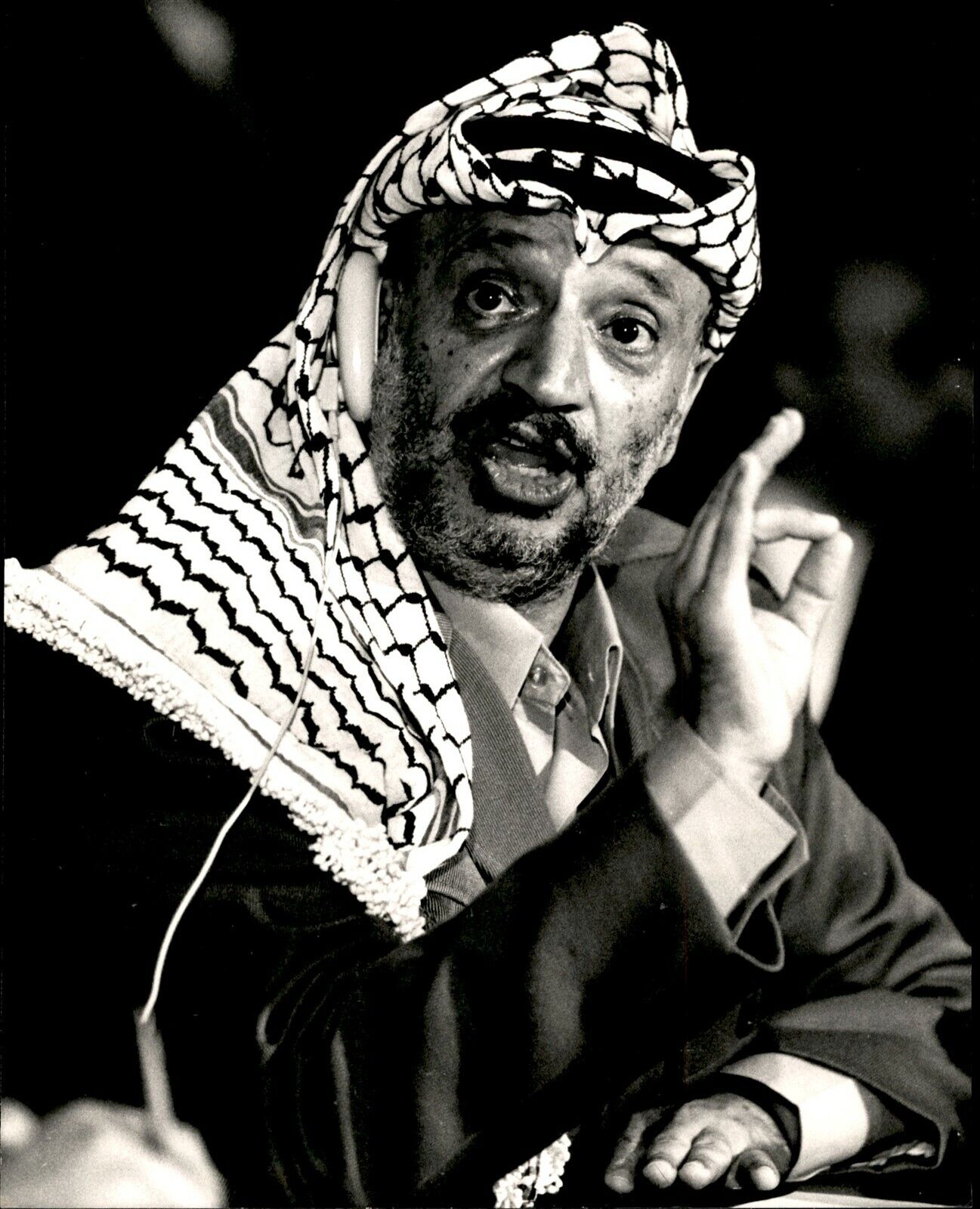
Arafat is the architect of the Gaza War.

Analysts have compared the Oct. 7 massacre to the 1973 Yom Kippur war, a massive failure of Israeli intelligence to read its enemies’ intentions and capabilities.

But the more relevant historical date is Sept. 5, 1972, when Palestinian terrorists raided the dormitories housing the Israeli Olympic team at the Munich games.

The Palestinians held 11 Israeli coaches and athletes hostage, then tortured and killed them, and mutilated their corpses.

After being forced to relocate to Lebanon, Arafat saw that the only way to break out of a doomed cycle of local conflicts was to internationalize his war and turn Palestine into a global cause.

Europe was tested.

Munich and its aftermath showed that even before a single generation had passed, their vows were hollow, their honour a fraud.

You could kill Jews in a live broadcast to hundreds of millions of people, and the great men of Europe would arrange the assassins’ passage to safety.

By promoting the Palestinians’ cause, the Europeans joined them in creating the prototype of “Third World man.”

The collaboration served the narcissism of Western elites, and the political ambitions of the Western-educated elites of the decolonized world who weaponized their resentment to extract money and arms from their onetime overlords.

A century removed from the apex of their strength, and their will to defend a civilization built by better men long depleted. Western elites’ self-image is sustained by Third World man.

By attributing to Westerners’ responsibility for his suffering. Third World man fathoms the reservoir of their once formidable power and hints they may again someday be replenished.

Accordingly, the Soviets used the Palestinians for the same reason street gangs employ children to commit felonies: Western elites do not punish those who commit crimes for which they blame themselves.

Despite being responsible for numerous losses of life in subsequent terrorist attacks, Arafat was welcome in New York when he carried a gun to the U.N. and threatened more war unless the world appeased his band of stateless brigands.

The august body recognized the PLO as the sole representative of the Palestinians as well as their right to self- determination, national independence, and sovereignty in Palestine.

The Palestinians had won entry into the community of nations by killing Jews.

A year later, the Europeans again rewarded the Palestinians for unburdening them of their guilt when the U.N. General Assembly passed Resolution 3379, designating Zionism as a form of racism.

Among all the world’s national independence movements, the nationalism advocated by the survivors of the Holocaust was uniquely racist.

It seemed that the U.N.’s only purpose was to consecrate Third World man and condemn the Jews.

Thanks to Arafat, the world had turned reason on its head and accepted the Palestinian strategy.

Then the War in Gaza had its horrific catalyst.

Posted in History, Politics | Tagged , , , , | Leave a comment

A thought for the week

There is a certain understanding in the Russian Orthodox Church that is typified by the following scenario.

It is the day of the General Judgement.

The people are making their way into heaven. Jesus is standing outside the gate, welcoming them.

Then He is seen to look off into the distance, and to search the horizons with His gaze.

Someone asked Him why he was doing that, and He said that He was waiting for Judas …

Posted in Uncategorized | Leave a comment